
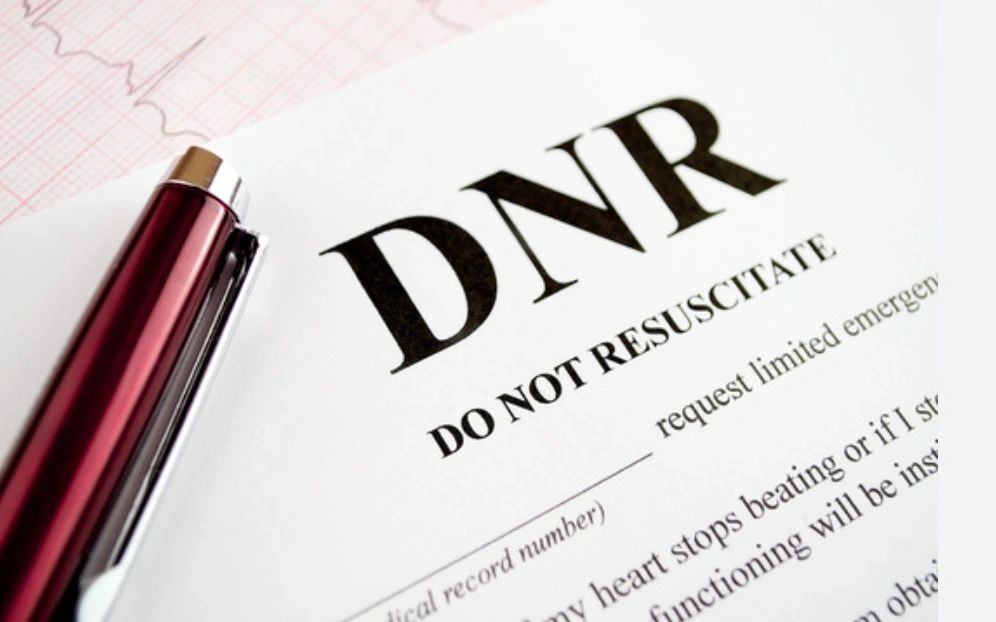
I recently had an in-depth conversation on the topic of DNRs and having walked this journey personally with my mother last year, seniors often know of them, but do not necessarily understand how they work and the differences between the two types of DNRs. Today’s blog discusses what the two types of DNRs are, their key components and comparison. The term “Do Not Resuscitate” or DNR often arises during serious discussions about end-of-life care. A DNR is a legal document indicating that a person does not want to receive cardiopulmonary resuscitation (CPR) if their heart stops beating or if they stop breathing. However, the context in which a DNR is applicable, in a hospital or out of a hospital, can significantly alter its implications and execution. Understanding these differences is imperative for patients, families, and healthcare providers and can prevent prolonged or unnecessary pain and suffering.
In-Hospital DNRs
An in-hospital DNR is relevant when a patient is admitted to a healthcare facility, such as a hospital or a nursing home. This type of DNR is part of the patient’s medical record and is adhered to by the medical staff within the hospital or care facility. Often one needs to initiate and sign a DNR upon admittance to the hospital or have one on file at the local hospital or care facility to be active. Admissions staff doing an intake to admit a patient from the ER to the hospital often hands the loved one or patient in the ER a packet that has several documents, including an In-Hospital DNR, in it for the patient or patient’s surrogate or Medical Power of Attorney to sign and submit. Tighter Legislation was put in place in with Texas SB11 outlining new In-Hospital DNR requirements in 2018.
This happened in my mother’s case. A packet was handed to my father expecting him to remember to fill out and turn in while also answering questions on insurance, medications, medical conditions, and a barrage of other questions around preparing for his wife’s hip surgery the next day which also included DNR questions which my mother clearly said yes to a DNR. Hearing these questions answered, it led to the belief that a DNR was in place, but this was not the case as she coded, and CPR was performed by medical staff overnight. Turns out the questions were in relation to her surgery the next day and not the general day-to-day care. DNRs must be discussed with and approved by a doctor, and then put into a patient’s medical chart. A “DNR” arm band is often placed on the patient and a “DNR” sign is prominently displayed on the room door to help avoid accidentally resuscitating when a DNR is in place. Look for these things to ensure that everyone on the medical team is aware and can honor your loved one’s wishes.
Key Components of In-Hospital DNRs
- Medical Supervision: Healthcare professionals manage an In-hospital DNR order and are immediately available to assess and respect a patient’s wishes.
- Comprehensive Care: While the DNR order prevents CPR, the patient will receive other forms of medical care. Patients will still receive necessary treatments and interventions that do not involve resuscitation.
- Ease of Implementation: Given the controlled environment, implementing an in-hospital DNR is straightforward. The medical team is well-informed and trained to follow the DNR order as part of the standard protocol.
- Advantages: Professional oversight ensures that the patient’s wishes are respected. The healthcare team can provide alternative treatments to ensure comfort and care.
Out-of-Hospital DNRs
Out-of-hospital DNR orders apply to individuals in non-hospital settings, such as at home, in assisted living facilities, or during travel. These orders inform emergency medical services (EMS) personnel and other first responders of the patient’s wishes. Texas Health and Human Services has a links to an Out-of-Hospital DNR form and common Frequently Asked Questions (FAQs).
Key Components of Out-of-Hospital DNRs
- Portability: Out-of-hospital DNRs are often portable documents that must be readily accessible to EMS personnel. This may include paper forms, wallet cards, or even bracelets and necklaces indicating DNR status.
- Communication Challenges: Ensuring that EMS and other non-hospital healthcare providers are aware of and respect the DNR can be challenging. Clear communication and visible documentation are critical.
- Variable Enforcement: The enforcement of out-of-hospital DNRs can vary depending on local laws and the protocols of the responding emergency personnel. It is essential to check state-specific regulations and procedures.
- Advantages: A DNR allows individuals to maintain control over their end-of-life care preferences in various settings. Provides peace of mind that personal wishes will be respected outside of a hospital environment.
Comparing In-Hospital and Out-of-Hospital DNRs
Setting:
- In-Hospital: Applied in controlled healthcare environments.
- Out-of-Hospital: Applied in homes, assisted living facilities, and during travel.
Implementation:
- In-Hospital: Managed by professional healthcare teams.
- Out-of-Hospital: Requires clear documentation and communication with EMS.
Medical Care:
- In-Hospital: Comprehensive care continues minus resuscitation efforts.
- Out-of-Hospital: Similar care continuation with added emphasis on emergency response protocols.
Documentation:
- In-Hospital: Becomes part of the patient’s medical record. Needs to be on file at the hospital.
- Out-of-Hospital: Must be portable and readily accessible. Recommend placing on the refrigerator, card in wallet/purse/walker, or on Medical Alert bracelet/necklace.
Legal and Practical Considerations:
Both types of DNRs are legally binding documents but may be subject to different state regulations and enforcement protocols. It is crucial for patients and families to discuss DNR preferences with healthcare providers and legal advisors to ensure that one’s wishes are known and documented to execute correctly in any setting.
Understanding the differences between in-hospital and out-of-hospital DNRs is vital for making informed decisions about end-of-life care. Each type of DNR serves a purpose and ensures that a patient’s wishes regarding resuscitation are known and respected in different environments. By understanding these distinctions, patients and families can better prepare for various scenarios, ensuring peace of mind and alignment with their loved one’s end-of-life preferences.
Britt Hemsell
Senior Living Advisor and Blog Contributor


